


Today on Arguably, author Shiv Malik outlines how his plan for Forest City – a new city for one million people east of Cambridge – could help repair our broken social contract. This piece is paid but you can read it now by becoming a full subscriber or signing up for a seven-day free trial.
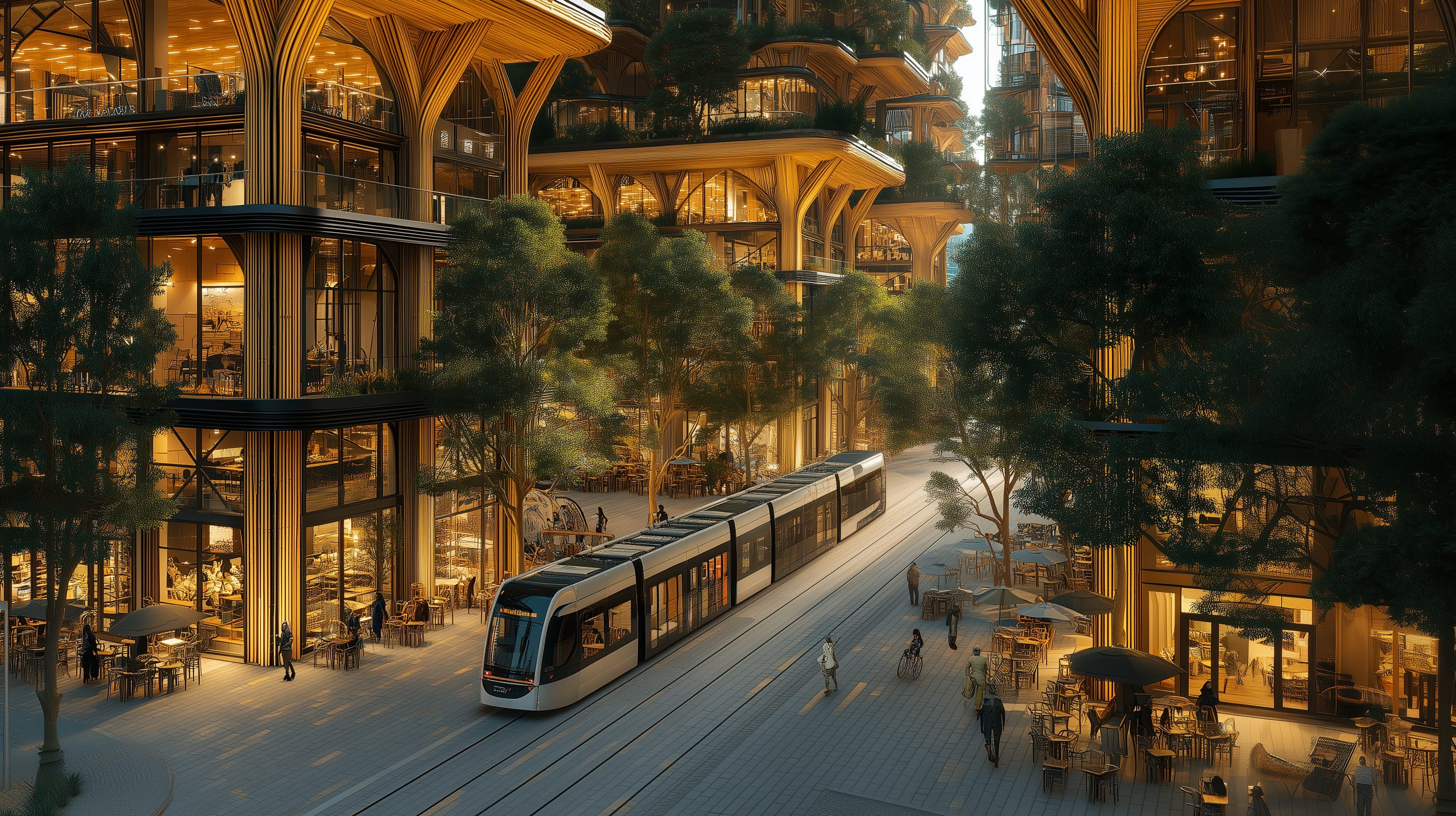
An artist’s impression of Forest City
There is a question in Designing Hope, a book by the futurist Sarah Housley, that made me gasp when I first read it. “What,” she asks, “will 22nd-century Britain look like?” When the present political climate barely lets us predict the next week or month, it feels about as brave a thing as anyone could venture. And it is precisely the sort of question that Andy Burnham should be answering if he wants to convert “Manchesterism” into a solid set of principles.
While Manchesterism remains a nascent idea, not yet easily distilled from the practical delivery during Burnham’s time as mayor, there is something radical in his desire for place-based politics and public control of the four basics – energy, water, transport, housing. It is perhaps something that could begin to answer Housley’s question. Something that, with fuller expression in both policy and the real world, the public might come to recognise as a genuinely distinct idea, set apart from free-market neoliberalism on one side, and plain old Fabian nationalisation on the other.
Building a city from scratch, as we are with Forest City – a proposal for Britain’s first new city in over 50 years – has forced me and my co-founder Joe Reeve, who also set up the Looking For Growth campaign, to spend a long time thinking about exactly these four fundamentals, and also what a fair future looks like.
