



Much has been made of the decline of the British high street, a process which now feels inexorable. The high streets etched in our public imagination will not return in the forms they took in previous decades. And Whitehall is not rising to the challenge of reinventing local retail for this century.
Successive governments have leaned on the same High Street Task Force or commissioned independent reports to solve the ‘enshittification’ of the high street. Much emphasis — not unreasonably — has been placed on addressing the immediate challenges of litter, antisocial behaviour and vacancy rates. But despite ad hoc and short-lived investments in high streets, the rapid turnover of politicians means that only one high street strategy has been developed in the last ten years — the post-Covid strategy to help high streets recover from the pandemic.
The High Street Fund was launched by businesses including Barclays and Deloitte after the 2011 riots, sparked by a protest over the police killing of Mark Duggan, which resulted in days of looting and riots in towns and cities across England. The fund provided small grants for emergency shop repairs and the replacement of damaged stock.
The Future High Streets Fund announced by Theresa May was established to support “shovel-ready” projects — such as the pedestrianisation of two streets in North Devon. Boris Johnson’s Levelling Up Fund and Rishi Sunak’s Long-term Plan for Towns followed, focused on supporting similar schemes such as the creation of Aberdeen Market.
In recent years, Keir Starmer went further, creating the £5bn Pride in Place Programme, granting 10-year endowments to 250 disadvantaged communities. A study by the Independent Commission on Neighbourhoods found that the Starmer administration spent more than Johnson on such interventions, relative to its time in office — a record to be proud of as we move into the Burnham administration.
Our personal favourite is the well-intentioned Chewing Gum Task Force, funded by chewing gum manufacturers including Wrigley and managed by Keep Britain Tidy. The Task Force has helped local authorities clean over four million square metres of pavement. We await the establishment of a Graffiti Task Force, funded by paint manufacturers!
But to be frank, most of these policies have been sticking plasters on a longer, deeper decline. Shopping has increasingly moved online, where retailers continue to benefit from more favourable tax treatment than their bricks-and-mortar competitors, including Chinese giants such as Temu. At the same time, the rise of out-of-town business parks has drawn spending away from the high street, while the cost-of-living crisis has squeezed disposable incomes.
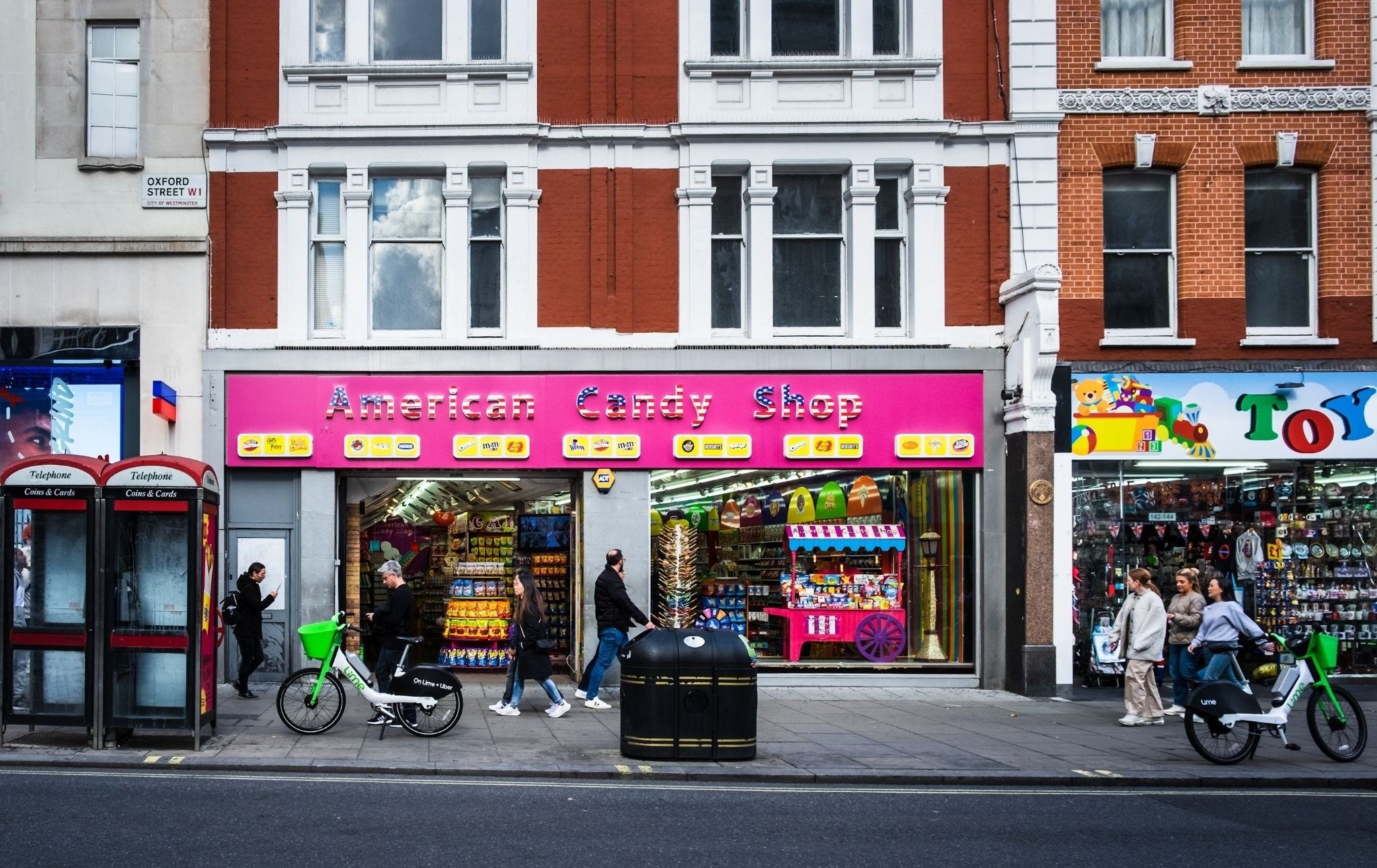
The Burnham administration has turned its attention to high streets early. And, so far, the new government seems to understand the scale of the problem. The Prime Minister has started with a crackdown on money launderers and tax evaders. Though there is no consensus on the scale of counterfeit Britain, Westminster City Council alone has seized millions of pounds’ worth of dodgy merchandise from American-style candy stores that have come to symbolise Oxford Street’s decline. Burnham has also established a task force to — as the Guardian put it — generate “radical” ideas to revive high streets.
But no amount of cosmetic change will ‘save’ the high street. The public has long voted with its feet — or, more accurately, its thumbs — opting for Amazon and other online retailers. Punters do so in the comfort of their pyjamas. If we want to encourage people to get up from their sofa, a much more radical vision for the high street is needed.
That requires the uncomfortable and serious task of restructuring our local economies. Our high streets are oversaturated with retail and, too often, dominated by low-quality shops. We must look for an alternative.
In innovation policy — which is charged with the development and application of new ideas and technologies — the ‘triple helix’ model, coined by Henry Etzkowitz and Loet Leydesdorff in the 1990s, describes how the interaction between industry, academia and government is necessary to foster innovation. The modern high street, dominated by retail, needs a triple helix of its own: experiences, shops and services — attracting young and old alike, drawing in people across different income groups and backgrounds to sustain high street footfall.
Thriving high streets benefit from experiences: bowling alleys, cinemas, laser tag, children’s play areas and restaurants. They need retailers: from independent or community-owned shops to large international brands. And they need to include services: dentists and GPs, laundrettes and libraries, nurseries and food banks, pharmacies and substance misuse services.
The high street must, in short, give the public access to beetroots, bowling alleys and botox — experiences, retail and essential services in one place. This helps increase the central metric of high street success: footfall. Those that are dominated by retail lack a diverse mix of uses and risk entering a doom loop, whereby declining footfall attracts low-quality businesses, accelerating decline and vacancy rates.
Not every parade of shops can offer that variety, of course, but large town-centre high streets can and should. Peckham’s Bussey Building is one example: a cluster of former industrial factories and a car park off the high street, it has been transformed into a visitor destination with culture, leisure and hospitality, complete with a rooftop bar. It shows how assets can be repurposed creatively to draw people back to the high street.
Those high streets often benefit from wealthier punters with higher-than-average disposable incomes, but the working-class industrial high streets in the North and Midlands need not look like Kensington or Chelsea’s main thoroughfares to serve their communities and be places of meaning.
But we need a new financial model for high street regeneration to ensure that every postcode benefits. There are currently two models that we are heavily reliant on and neither is going to provide the transformational change at the scale we need.
The first is public subsidy. Historic England, Arts Council England, the Ministry of Housing, Communities and Local Government and the Department for Culture, Media and Sport all play their part, as does the National Lottery Heritage Fund alongside many voluntary and community organisations.
The government should continue investing, particularly in places where market conditions make private investment difficult. But there will never be enough public money to regenerate every struggling high street through grant funding alone. We therefore need to use public investment to attract and shape much larger pools of private capital.
The second model is redevelopment, particularly through housing. There is merit in building more homes on and around high streets. They are usually well-connected, centrally located and often surprisingly low-density: many were built around one- and two-storey commercial premises in the early and mid-20th century. More residents mean more customers.
But redevelopment is undermined by poor viability, fragmented ownership, the cost of assembling sites and low land values. We therefore need a broader toolkit. We propose High Street Investment Zones: special-purpose development vehicles giving the new mayors and their strategic authorities greater autonomy and stronger powers to shape the future of strategically important high streets.
These investment zones could combine more muscular Compulsory Purchase Order (CPO) powers with targeted public investment and stronger licensing and enforcement powers. A beefed-up CPO mechanism would allow places not only to bring vacant and underused properties back into productive use, but to exercise greater control over uses that can undermine the long-term health of a high street — including, where appropriate, limiting the proliferation of gambling operators and vape shops.
Zones could operate similarly to what Power to Change, a charity that promotes community ownership, describes as a Property Holding Vehicle (PHV): a government-backed investment vehicle to purchase and restore high streets.
In Power to Change’s vision, the PHV would be brought under community ownership. But there are alternatives. Instead, a High Street Investment Zone could take a broader portfolio approach to regeneration, acquiring properties and sites, regenerating them and capturing some of the subsequent uplift in rents, values and revenue from business rates. Returns from successful assets could then be recycled into harder-to-develop parts of the high street.
Rather than the government using limited fiscal headroom to regenerate places it does not own, the public sector should build an asset base whose returns help finance the next round of regeneration. That’s not unreasonable when, as IPPR has set out, local authorities sold 75,000 council-owned assets between 2010 and 2023.
Finally, high streets need to be more attractive places to spend time. That means addressing their physical deterioration and the insecurity that has become associated with too many of them.
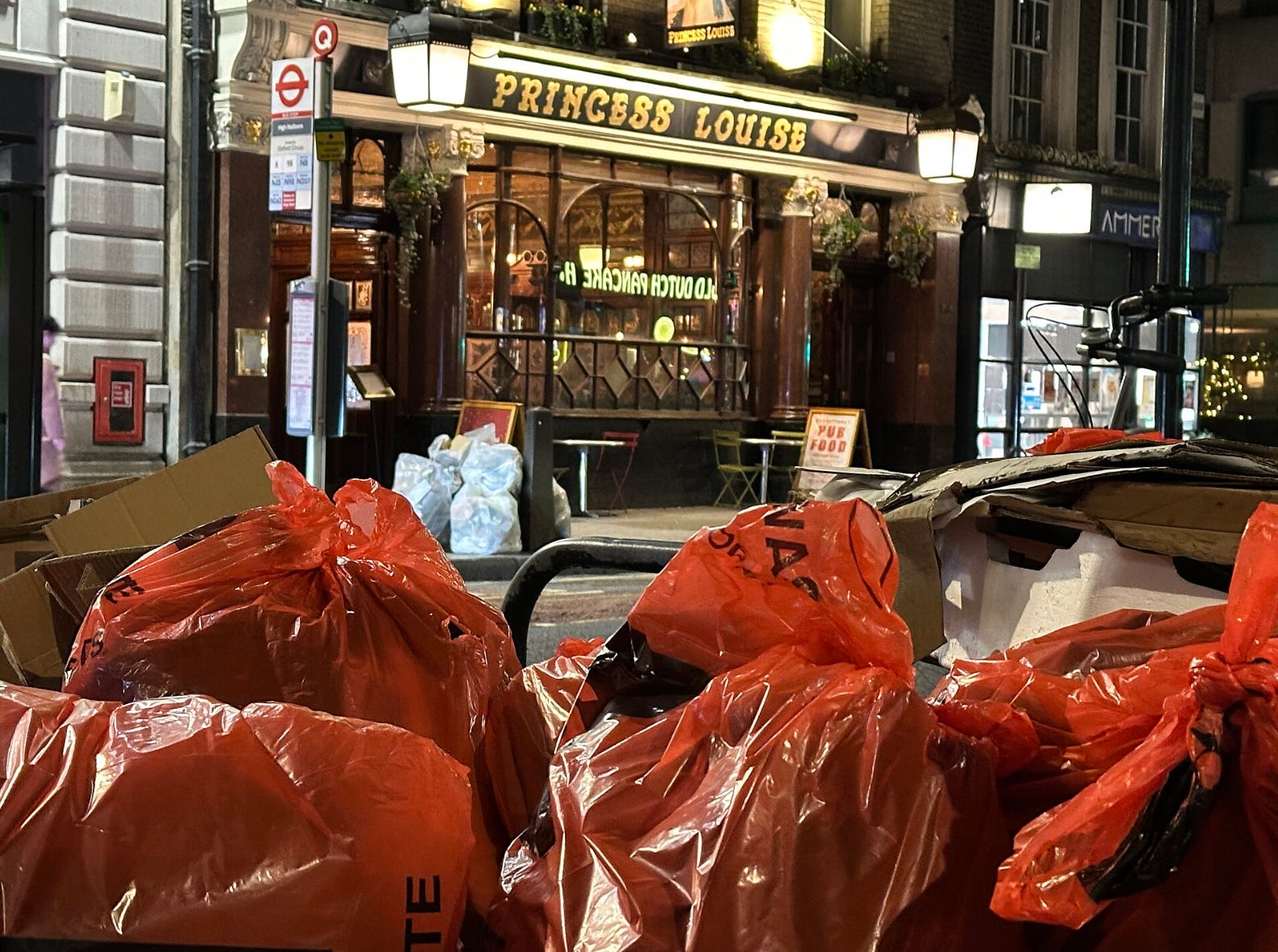
Cheap neon signs, overflowing bins, hostile street furniture, poor lighting and no tree cover, after a record-breaking summer, do not make the high street attractive. Beautification — an approach many governments have already tried — is a perfectly reasonable strategy when paired with structural changes such as new financing models for high street regeneration, more diversity across them and a concerted effort to help shops retain more of their income. Programmes such as Pride in Place can support this, but maintaining attractive high streets requires ongoing investment.
How do you end rough sleeping?

Today on Arguably, Aveek Bhattacharya, strategy fellow at Coefficient Giving and former chief economist of the Social Market Foundation, sets out how Andy Burnham can meet his pledge to end rough sleeping.
The second dimension is safety. People will not spend an afternoon, stay for dinner or allow their children to travel independently to a high street they do not feel comfortable in. That means basing police resources in high streets. Barking, in east London, demonstrates how not to do this: the historic Barking Magistrates’ Court in the centre of Barking is now insecure housing and the former Barking Police Station was allegedly converted illegally into a ‘beds for hire’ hostel with 30 people living in five rooms back in 2015. The building is now a nail salon.
Unlike London’s ‘tri-borough’ service, where policing is split across three local authorities, the government’s new Local Police Units will mirror local authorities’ geographies — bringing them closer to the communities they serve, which may help the high street feel safer. But we need a new generation of police officers and stations alongside properly resourced local authority enforcement to tackle persistent antisocial behaviour, environmental crime and businesses operating outside the rules.
Reinventing the high street for real does not mean returning to the past — retail habits have changed too profoundly in the last half-century with the rise of out-of-town retail for the baby boomers, online retail for Gen X and falls in drinking for Gen Z. Now, most British towns, without large reserves of wealth, can no longer guarantee demand for separate family-owned butchers, grocers, bakers and chemists. But the human desire for social connection and independent commerce, outside major multinationals, remains.
We must adjust to the digital age by providing a high street with the things the internet still cannot replicate: human interaction, experience, public services, community, place, identity. To achieve this, we need to find a new model to finance high streets. Laying the groundwork over this parliament requires taking back control of the high street from counterfeit operators and building the political appetite to break up the retail monoculture that can no longer sustain our town centres.


For many years I have advocated having some form of reform about how most of our highstreets are owned and (re)developed.
I have lived in Ashington, a former, coal mining town in Northumberland, for over 30 years owning an independent opticians practice in the town centre.
I have been a District and Town Cllr and member of the “Town Team” and “Town Board”. Politically I am a LibDem in a traditionally Labour Town.
There are some promising developments. The Northumberland. Line passenger rail service to Newcastle has reopened.
The Northumberland College is getting a new campus, 500m from town centre and a cinema, restaurant complex is, eventually, getting built, on the site of “the Ashington hole”
There are too many Turkish barbers, vape shops, betting shops and take away food outlets. Like so many towns.
Part of the problem is the 100 or so properties are owned by different people/companies, so it is hard to look at the street in totality and redevelop sensibly, flats above shops, solar power on whole long roofs, etc.
My solution is to form something like “The Ashington Town Centre Company” with all the current owners being shareholders
(proportionate to value of properties they currently own).
This should allow the. whole street to be considered together.
I would also envisage local people given the opportunity to invest by purchasing “bonds” paying a commercial rate of interest. There are people in the town with tens of thousands of pounds and I hope it would appeal to them to see their money invested in their community as well as paying interest.
As you say there needs to be radical changes. So here is my suggestion.
Happy to discus, debate and refine theses ideas.
My council's answer to High St decline is to "attract people" by providing free parking at cost of 1M per year in lost revenue and hiking my council tax higher. It's essentially a subsidy from those who don't have cars (younger and poorer renters) to those who do (richer homeowners). And it hasn't worked. All it did is raise car traffic with more Chelsea tractors in narrow streets and pollution.
As correctly pointed out, we don't buy stuff from High St much, it's all about service sector - salons, restaurants, dentists, coffee shops, etc. - and these need density to be viable.
So what does the local pensioners (mostly rich homeowners) do? Object to any housing being built at or near high street, and write celebratory notes in the quarterly newsletter that the council spared them of increased density in the latest plan.