


(Elena Rostu/Shutterstock)
Earlier this year, 30-year-old Labour MP Luke Charters stood up in the House of Commons and described Britain’s student loan system as “Frankenstein’s monster”. He told parliament that communication around Plan 2 loans felt like a “misselling scandal waiting to unfold”. Borrowers were, he noted, “never clearly told that the higher graduate earnings mean higher loan interest”. As one of the youngest MPs in parliament, the punitive monthly repayments were no longer some abstract policy dilemma, but a lived reality.
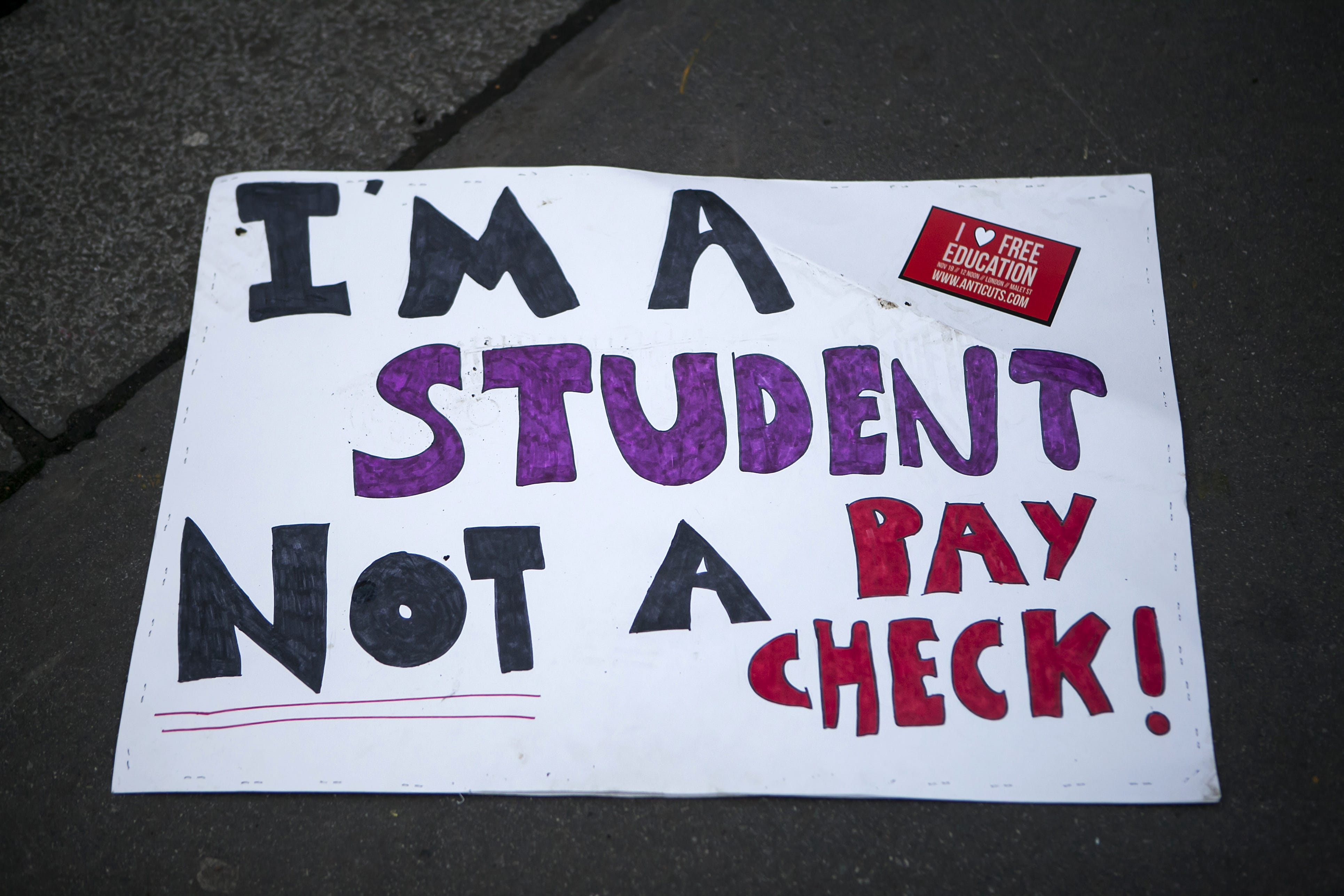
Clips of Charter’s speech spread across social media, igniting fury at the current system. Graduates compared balances and interest rates (the average debt is now £53,000 and you have to earn £66,000 a year before it reduces). Suddenly, column inches in broadsheets were dedicated to the debts of their junior writers, while political reporters pushed the government on what they planned to do about the generational scandal unfolding before our eyes.
Though the economics of student loans had not changed overnight, what had suddenly changed was representation. For the first time, parliament contained a meaningful number of people whose own lives were being impacted by the post-2012 student finance model, and now, the entire political system was being forced to confront it.
The whole affair was a useful reminder of how politics actually works. Problems do not simply become priorities because they affect large numbers of people, rather, they become of interest when someone in power decides to make them one. As the American political scientist Mancur Olson observed back in 1965, politics does not simply reward the largest groups, but the best organised ones. After studying democracies, Olson concluded that the size of grievance and scale of suffering simply counted for less than the ability to coordinate, lobby and organise.
Viewed through this lens, Britain’s treatment of young people begins to make more sense. The country has spent decades building institutions to represent almost every interest group imaginable, and filling the government with people who personally understand why those groups matter. Ministers for veterans tend to have served, those responsible for business policy are often former employers. Homeowners dominate every cabinet. Representation is both institutional and lived. Yet, young people have neither. There is no department for their specific interests, and nobody around the table whose daily life is shaped by the pressures they face.
Alan Milburn’s recent review into young people and work offered another bleak assessment of the consequences. One in eight young people across the UK are not in jobs, training or education. More and more are struggling with ill-health, bleak futures, and a cruel rhetorical culture that characterises them as weak. In their futures, home ownership is a distant dream and routes into secure employment narrow every day. “We are at risk of a lost generation,” Milburn warned. “That is a moral crisis.”
Part of the problem lies in Whitehall’s makeup. The complex issues highlighted by Milburn stretch across multiple departments: housing affects health, health affects employment, employment affects social mobility. But Whitehall still treats each issue as though they are distinct, best remedied through separate departments with their own objectives, IT systems, budgets and priorities. In this system, young people are everybody’s responsibility. That also means they are no one’s.
So what could Britain do to redress the balance? One answer is a Secretary of State for the Young. This would not be another symbolic ministerial title or layer of unwelcome bureaucracy, but a clear lever of political accountability. Britain already has a Minister for Children, of course, but that role is a junior one in the Department for Education, its remit limited to children’s services and safeguarding. It does not get a seat at cabinet, nor does it span departments. This would be categorically different: a senior minister whose mandate covers the full span of young adult life, from education and employment to housing, health and the welfare state.
A cabinet-level minister for young people would consider every policy through a generational lens, bringing together the issues that are dispersed across Whitehall. In practice, this could mean generational impact assessments on major fiscal decisions, such as asking what a Budget means for someone aged 25 – a question that was conspicuously absent from our last major fiscal event, when the Chancellor quietly froze student loan repayment thresholds, increasing the real-terms burden on graduates without any consultation.
It also could mean a single cross-cutting strategy for youth employment, housing and mental health, rather than leaving each to be quietly deprioritised in someone else’s in-tray. They’d consider how government decisions affect younger people, coordinate policy across departments and ensure that generational interests are represented – every week – at the cabinet table. Just as the Chancellor asks what it will cost, the Secretary of State will ask what it means for the young.
There will be some who point to the small matter of voter turnout. They will say that if young people want better representation, they must turn up at the ballot box in greater numbers and force change (just 37 per cent of 18-24-year-olds voted in 2024). But is it any wonder that young people participate in lower numbers when politics so consistently fails to represent their interests? Disengagement comes from being neglected, and the pattern becomes self-fulfilling. Parties ignore voters who don’t show up, and voters who are deprioritised stop showing up. Something has to forcibly break the cycle.
Milburn has given us yet another valuable diagnosis of the challenges facing younger generations. But student loans tell us that even if the diagnosis is well understood, it was meaningless until graduates entered parliament in sufficient numbers for the scandal to no longer be ignored.
And that is precisely the problem. By the time today’s young people hold the levers of government, the damage will already be done. A generation of prospective politicians will be lost to insecurity and disillusionment. The case for a Secretary of State for the Young is not sentimental. We have simply run out of ways to get their interests into the room.