
The quiet collapse of British universities
One of our great triumphs and economic advantages is fading away
Today on Arguably, Glen O’Hara, Professor of Modern and Contemporary History at Oxford Brookes University and author of books including New Labour, New Britain?, writes on why we should all care about the higher education crisis.
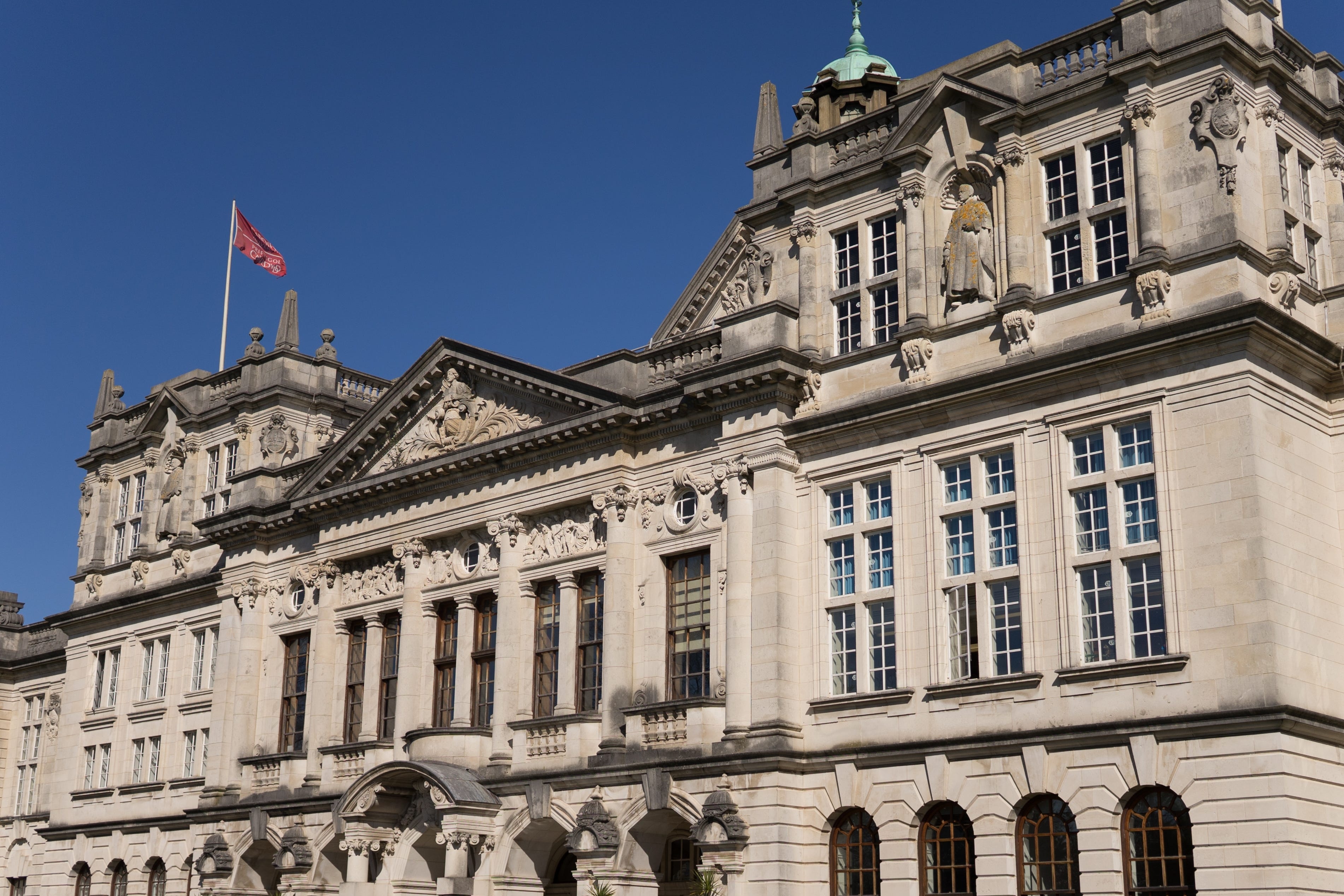
Cardiff University (Niko Natsuki/Shutterstock)
Britain’s long-gestating university crisis is now beginning its acute phase. Tens of thousands of jobs have been lost – at institutions as different as Aberdeen, Cardiff, Sheffield Hallam, and Sussex – while many more are in danger. Some institutions will not survive. Others will last by turning themselves into a pitiful simulacrum of a university. Unregulated competition for students, and a race to the bottom to get them on seats, is undermining quality, stability – and most universities’ solvency. But no one seems to care. Why on Earth is that?
There are some general reasons, of course. Speaking up about what’s going on is at a premium. There is a kind of intellectual pessimism in the air, a sense that Trumpism makes universities’ past expansion and idealism old-fashioned or silly. A good number of academics are fading from the scene, disengaging or taking early retirement rather than making a fuss. Long years of career success and reward, from school onwards, mean that many are ill-attuned to fighting for every scrap of ground. They are a deeply herbivorous tribe. Those who wish them ill are not.
The sense of unavoidable decline spreads all the way to the top. When populist movements look likely to seize power – and few would bet confidently against Reform winning the next election – elites tend to accommodate themselves to power. Some university chiefs have apparently been meeting with Nigel Farage’s lieutenants, and more will no doubt follow. They know that Reform will rip higher education to shreds, but likely hope to soften the general blow and win a reprieve for their own institutions.
Most voters won’t even know that there is a problem. The local press has shrunk and shrunk, and expert national coverage is thin indeed. So there’s no one to join the dots. A few hundred posts gone at a university here, a subject or course abolished there, a big forced merger there – who’s to say what it all means? You can only see the real picture, and work out the true causes, when you have time and knowledge to stand back. Not everyone can match, say, The Herald’s strong coverage of the financial debacle at the University of Dundee, which has had to be bailed out by the Scottish government.
These factors are, however, very general ones. They are joined by some more specific developments in the sector itself. Consider the incentives for senior management. Do they really want to make it clear how close their university is to the edge, at least before they can move on to a safer job elsewhere or retire? Do they really want to question, challenge or undermine the consultancies they’ve hired for so long to downsize and “reimagine” what teaching and learning should look like? It seems less than likely.
It does not help that the various university mission groups’ interests are not aligned with one another. The big guns gathered in the Russell Group at the “top” are not exactly doing okay, but they can roll on for another few years by hoovering up almost every undergraduate and postgraduate they can find – whoever they are, and from wherever they come. It is simply not in their interests to assist those universities they’re divesting of students and cash in higher education’s Wild West era. No unified advocacy is likely to emerge from within the sector.
The main lobbyist for staff themselves, the University and College Union, is not very well-respected, is roiled by internal dissent, and can be safely ignored by employers nationally after failing to hit the turnout threshold for a country-wide strike in December 2025. UCU can and will make a difference at a local level, stopping some compulsory redundancies for instance, but as a national voice it sounds like a whisper in a gale.
Nor does the government have much of a stake in truth-telling. Its preferred mode is operating behind the scenes, trying to encourage mergers so that the stronger brethren take the weaker under their wings. All the better, of course, to avoid the blame when things go wrong. Nor do most politicians imagine it will be their children who have their life chances stunted by local course closures, or get ejected from their degrees in a last-ditch emergency. They might get a nasty shock in the end.
The truth is that ministers have not the faintest clue what to do; they’ve got very little money to commit and they don’t have the time, space or imagination to think their way back out of a labyrinth of quasi-markets, over-competitiveness and leveraged borrowing. They don’t want to raise tuition fees any more or increase taxpayer spending, so any government intervention is going nowhere. Whitehall and Westminster are going to keep quiet about the whole thing. If they don’t say anything, and universities themselves speak out of the side of their mouths, who is going to notice some academics and other professional staff losing their jobs?
Universities are not popular. They are under increasing assault from the populist right as ridiculous factories of so-called “woke” ideas, and the vast debts that have been placed on young people have come to seem like less and less of a good deal as the terms have changed. Two-thirds of students tell YouGov that they think their tuition is poor value for money: only 6 per cent of voters said they wanted more university spending in one 2024 poll. The so-called “graduate premium” of higher earnings for workers with degrees does still exist, but at 24 per cent among young people it’s not what it was.
So the crisis feeds on itself: marketising higher education, and making it a winner-takes-all disaster class, undermines its very purpose and thus its popularity. So it’s never going to be much of a story, even as it fails badly.
Spectacular failures are also going to be unusual. Most universities will break themselves up inside, closing everything they can, to stay afloat. They’ll chop up doors and desks for firewood if it keeps them open. That is, after all, what leaders and governors are there for. A really dramatic implosion at a huge red brick would be a real (and, cynically, a great) story, but more likely is a slow, grim dribbling away of one of Britain’s great triumphs and economic advantages. Even in the early 2020s, higher education paid back fourteen times more than governments put into it and was worth £265bn a year. But even that doesn’t seem to count for much these days.
So there it is. No one is going to do more than shrug as the university sector as we have known it slips beneath the waves. It has come to seem inevitable. Higher education’s own leaders, and the government, are not going to speak up. Staff have little voice and even less opportunity to raise the alarm. The public are not particularly impressed by university funding and performance anyway. But be careful what you wish for: just because something is not a story, that does not mean it is not important.


