



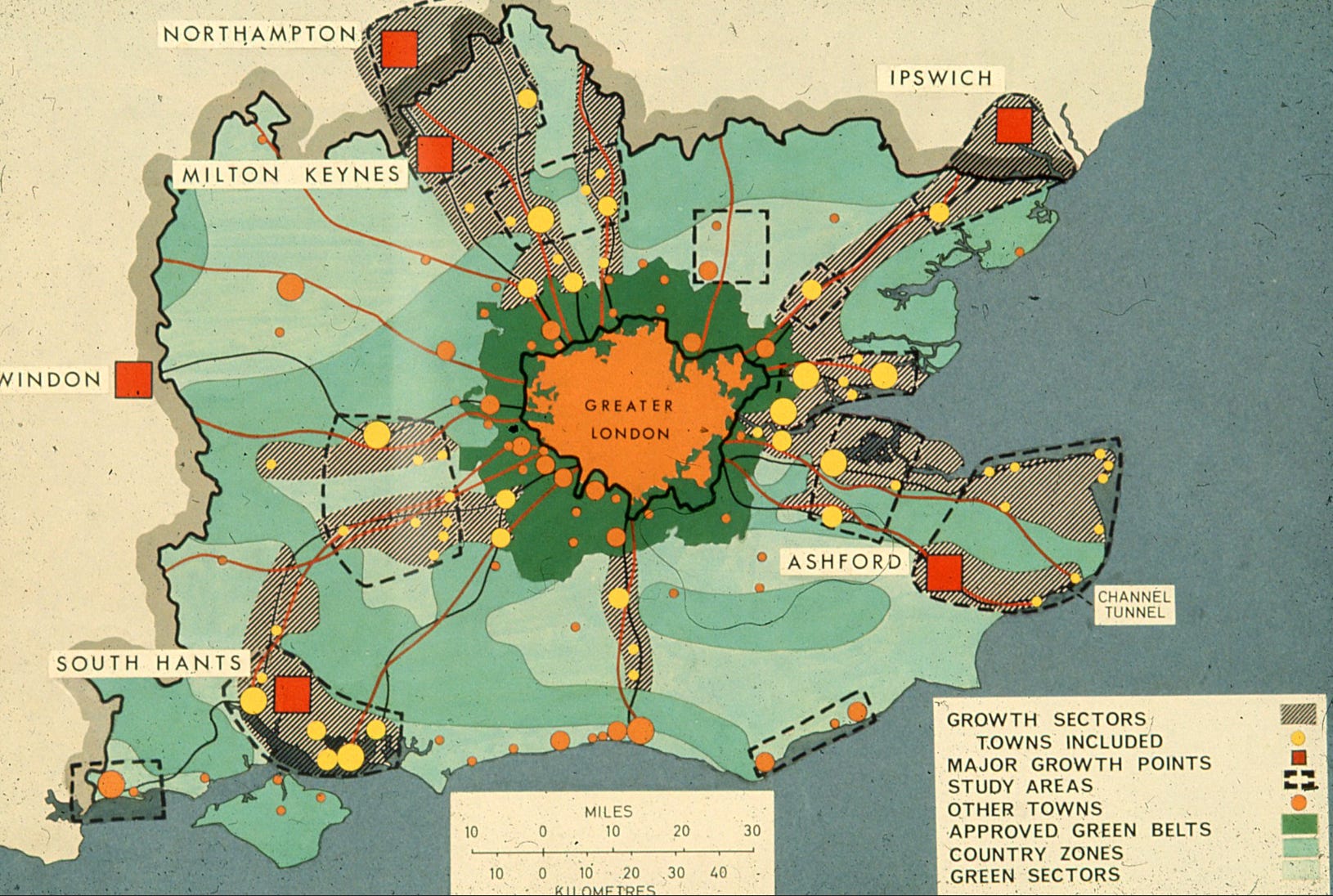
The UK has a long history of building New Towns. After the Second World War, the New Towns Act 1946 paved the way for the development of Stevenage, Crawley, Hemel Hempstead, Basildon and Harlow. Stevenage now has one of the largest life sciences clusters outside the US.
The second generation of New Towns, a decade later, created Telford, Redditch and Runcorn, while the most recent wave in the 1960s saw the creation of projects in Milton Keynes, Warrington, Northampton and Peterborough. Milton Keynes is the only city on the list, cementing its status as the most successful new town in England.
Labour’s current New Town plan is integral to the party’s housing strategy, allowing for a massive expansion of supply and construction capacity in an overly tight market that locks people out of ownership and stable accommodation. Yet, two years on from Labour’s election victory in 2024, the plan to build 12 New Towns across the nation now looks uncertain – beset by a slow civil service and hostile local authorities. In this piece we’ll set out how to rescue it.

