


Today on Arguably, as UK sovereignty over the Falkland Islands is questioned once more, Ben Judah reveals in full the plan he proposed while a Foreign Office special adviser. This article is free to read but become a paid subscriber for just £6 a month or a founding member to ensure you never miss a piece from Ben and our other columnists.
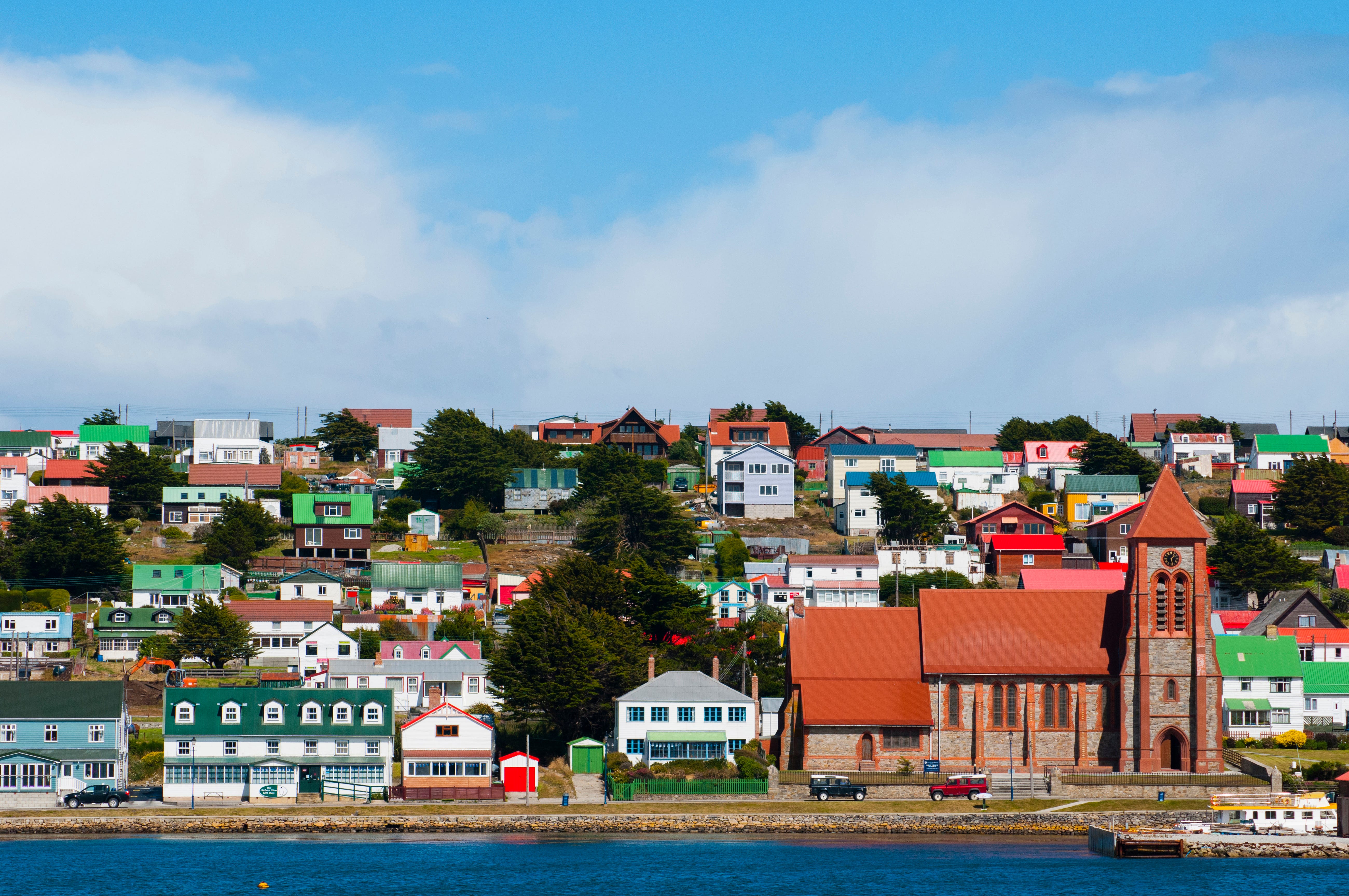
Image: Danita Delimont/Shutterstock
It pains me to say this, but it’s got to be said: Labour got the domestic politics of the Chagos deal wrong. These weren’t just tiny islands in the middle of the Indian Ocean that nobody goes to. Rather, as an Overseas Territory – a sovereign piece of British sand and soil – they were inevitably going to be a potent symbol of national identity, which the government handed on a plate to the Conservatives and Reform. Eighteen months on, it bears the scars: a policy the public does not understand that seems to prove progressive indifference to territory, sovereignty and something of our island story all at the same time.
We need to take a step back. There are two truths about the Chagos Islands. The first is that the complex security dilemma we faced in Diego Garcia meant Britain, not just Labour, had no choice but to pursue a deal. Unignorable security logic dictates this and it’s why Liz Truss started the process and David Cameron initiated text-based negotiations with Mauritius. A deal binding Port Louis to the West and honouring our 1965 commitment that the isles would eventually be reunited with Mauritius, is the only way to neutralise the long-term threat of Chinese penetration into the outer islands. This would compromise a uniquely sensitive base in the absence of the massive allocation of naval resources which neither the US nor the UK have. Sooner or later, a deal will have to be done to avoid that threat or the risk of a future Democratic president recognising Mauritian sovereignty. But for now there is a Trump veto.
The second truth is that the real failure was doing nothing to rebut accusations of a “Surrender Agenda” when the answer was staring us in the face the entire time.
Imagine that instead of presenting the Chagos handover in isolation, the Prime Minister had embedded it as part of a radical piece of progressive patriotism: transforming Britain’s 10 inhabited Overseas Territories – from the Falklands and Gibraltar, to St. Helena and Bermuda, currently run with governors – into Overseas Kingdoms. Chagos, a retreat, would have been juxtaposed with a historic advance. At the time of the September 2025 cabinet reshuffle, which saw my then boss David Lammy become Deputy Prime Minister and Justice Secretary and me depart the Foreign Office, I was working on a paper on the first steps in this direction. The research I did, speaking to governors, diplomats, security officials and British Overseas Territories Citizens themselves, convinced me that not only is the Labour Party missing a trick, but that Britain as a whole is squandering this treasure.
As we have for generations. Since the Second World War, the handling of the Overseas Territories has been a classic case of Whitehall knowing the price of everything and the value of nothing. In 1956, as the colonial watershed approached, Malta voted in a referendum to become part of the United Kingdom with three seats in the House of Commons. The fear that the cost of the necessary investments to bring Maltese living standards up to UK levels would be £10m a year, and that other colonies might want to follow suit, was the reason it was never implemented. Malta, of course, went on to prosper mightily and not be British at all. In 1967, Anguilla had to go as far as a rebellion, driving out police from St. Kitts and Nevis, with which it was then an associated state, to prove it wanted to remain British. Those that did were formally Crown Colonies until after the Falklands War and only rebaptised Overseas Territories as an alternative to the rather patronising “Dependent Territories” under Tony Blair.
Being more French
Postwar France could not have pursued a more different course. French territories that wish to remain part of the republic – such as Réunion, Guadeloupe and French Guiana – have been formally integrated since the Second World War as département d’outre-mer. In other words, fully as part of France, with 27 seats in the National Assembly, their own ministry and their own high-ranking minister, currently Naïma Moutchou. Nor does the French state let its overseas people forget this either. They are routinely reminded they are part of France from the maps on classroom walls to the weather forecast on the national news. Meanwhile, Paris has invested in its territories in a way we simply haven’t – from motorways and university campuses to a spaceport in French Guiana.
This may have cost the French state significantly more than the British one over the course of the 20th century but in the 21st it means the republic is shielded from two long-term sovereignty threats: lawfare, of the kind the UK fell victim to over the Chagos Islands, to easily imaginable Chinese, even American, territorial designs. Britain’s 10 inhabited Overseas Territories are on the UN Special Committee on Decolonisation’s list of non-self governing territories, compared to just two of France’s. What might that bring in the world of 2050 where Beijing and the Global South could be vastly more powerful? Under-invested British territories, whose premiers are either resentful of the fact or committed, to a degree, to independence (as Bermuda and British Virgin Islands are), are particularly vulnerable.
We need to look ahead and be more French – so nothing like Chagos ever happens again. Our wake-up call has just arrived in the form of a leaked Pentagon memo which suggests the option of reassessing support for European “imperial possessions,” such as the Falklands, to punish Britain for its Iran War stance. Though this particular leak will probably blow over, in the midterm I fear we are on track to lose more members of the British family. What’s our answer to the British Virgin Islands? Its leadership has just submitted plans for constitutional reform envisaging a referendum by 2031 and then one every eight years until the answer is yes. What’s the positive British offer to stay? Similarly, what’s our answer to the Turks and Caicos Islands, where an organised crime epidemic meant that in 2025 they had the highest murder rate in the Caribbean? With no serving UK police officers there to support, they are now relying on Barbados, Jamaica and the US to put boots on the ground to battle crime. The longer this goes on, the more likely they are to eventually leave. We should be taking inspiration not just from France but also the Netherlands, whose overseas territories have long mostly been constituent kingdoms, to forge a new approach.
Working in the Foreign Office, I felt troubled as a progressive that over a quarter of a million Brits, most of them non-white, had to work with the British state through a third-floor team in a foreign ministry. I felt troubled that, on the statute book, the laws we used every day referred to them as colonies. I felt troubled that no secretaries of state ever seemed to visit them. And above all, I felt troubled that what they were asking for should have been theirs by right as British citizens just like me.
What these requests revealed of the British state ranged from the petty, to the outright scandalous, in its neglect of them. Imagine arriving in Britain and not being able to access the e-gates on the British passport issued by your overseas territory, unlike citizens of thirty foreign countries. The request has simply been ignored. Want to retire back to your island? If you have a British pension it stops uprating each year, for all but two islands, if you move back home. The numbers are so small that the cost of resolving this would be a few hundred thousand pounds. Again, nothing.
Worse, these citizens can’t access the NHS free at the point of use, even on a visit, unless they actually become resident in Britain. They only have access to the healthcare system via a special quota, which could be five or ten of the most urgent cases for many islands. Disgracefully, our Overseas Territories cannot access the bulk prices for medicines agreed by the NHS, with Whitehall leaving them to negotiate on their own. This waste is particularly absurd since many of them receive UK development aid.
Matters are worse when it comes to the criminal justice system: an abominable oversight when so many British Caribbean islands are suffering from rampant organised crime. You can forget requesting a secondment for a serving UK police officer. They would be forced to leave the force if they did so and for no rhyme or reason. Prisons are calamitous. I strongly suspect St. Helena and the Turks and Caicos Islands are struggling to meet the standards we would hold our penitentiaries to under the European Convention on Human Rights. Surely military matters are a bit better? Alas, last year, the Royal Navy’s hurricane watch ship failed to visit every Caribbean territory and these regiments are threadbare. And if a hurricane hits? In the case of the British Virgin Islands the offer from London was little more than a loan that the territory chose to refuse.
I tried my best, and I can only commend the excellent Foreign Office minister responsible for them, Stephen Doughty, for trying harder than any of his predecessors to unlock all of this. But the truth is that as an adviser or a minister, reporting to a very busy Foreign Secretary in a war era, there is a limit to what you can really do to help the territories. You need to be at the centre of government, able to work with No 10 and the Cabinet Office, or ideally with a Secretary of State and a ministry of your own, to be able to embark on truly substantial progress.
I left the Foreign Office pained by all this. How could the British state for decades have treated its citizens with such contempt? But moreover, I am still saddened at the unresolved, unsettled, and above all unimaginative, statement about our past and our future that this all amounts to.
The old progressive answer, I felt, would have been to simply ignore the Overseas Territories and assume they’d eventually make their own safe way. A new, better progressive answer, I came to think, would be to tie together what calls itself the global British family through more democracy and better institutions.
Imagine a Britain that embarked on this project of no more colonies: only Overseas Kingdoms. This is what progressive patriotism would look like. A new start-up ministry in the centre of Whitehall helping them get what they need out of the British state. Then a new Secretary of State and the Deputy Prime Minister assigned to constantly visit them. The word “colonies” wiped from the statute book. New Overseas Kingdoms, with their own MPs and Lords, benefiting from the flexibility of the British constitution. No more territories in the British Caribbean turning a blind eye to money laundering because there is more support from Britain to plug the shocking gaps they face in health and policing. Not only Overseas Kingdoms on the curriculum and on the BBC but an Overseas Kingdoms Volunteer Corps, bringing British students to the islands. All this should be delivered through a new white paper in consultation with the islands to find out what they actually want and need. Progressive patriotism means listening, earning their commitment for a common future and turning mere territories into constitutionally respected kingdoms.
Let’s not stop there. The right has found in Anglofuturism an alphabet for its dreams. Progressives too need brightly coloured visions to strive towards, that tell the story of who we want to be. Why are we happy that the population of the Falklands, a territory the size of Northern Ireland, is only 3,500? Why not a proposal to bring Brits down there to make Port Stanley a 30,000-strong eco-city in the decades ahead? Or why not turn Pitcairn in the deep Pacific, facing imminent depopulation, into a unique astronomy and security space observation hub with its pitch black skies?
If these territories were Chinese or American, you can guarantee their leaders would have dreams and ambitions for them. What is our vision for an island as incredible and strategic as St. Helena in the Atlantic, for the rare earths under equatorial Ascension, or for the geothermal wonders of Montserrat? At present, the answer is nothing. And I believe we are on course to lose several of them. Now, if Labour had a plan to establish Overseas Kingdoms, not only would they stay, but people at home would believe us when we say that the Chagos deal is an exceptional deal for an exceptional place. It would prove for all to see that we believe Britain’s best days are not behind it and that we are not condemned to managing decline.