


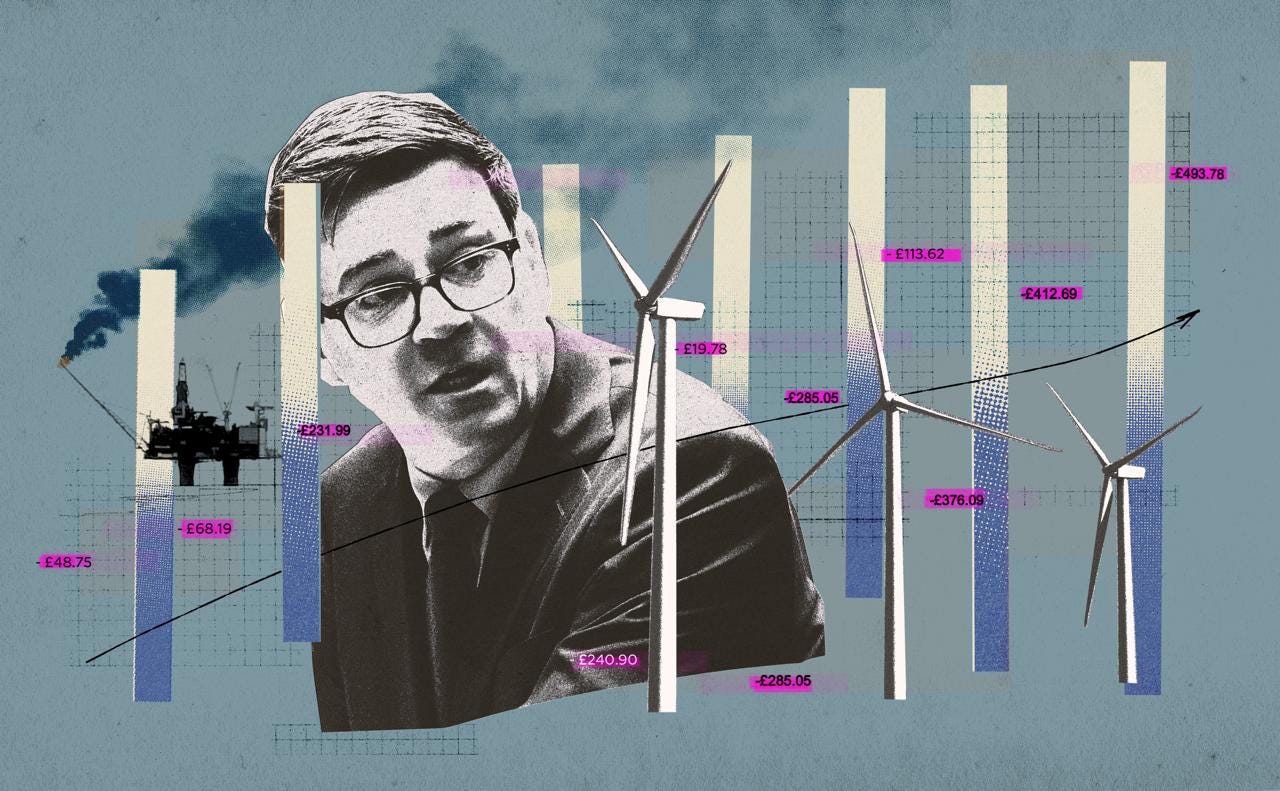
Today on Arguably, as Andy Burnham approves new North Sea drilling, I assess the state of net zero. To read this piece, become a paid subscriber or sign up for a free seven-day trial.
For decades, British climate policy was a matter of consensus. This wasn’t just the Ed Miliband show – David Cameron declared “vote blue, go green”, Theresa May enshrined the 2050 net zero target in law and Boris Johnson vowed that the UK would become the “Saudi Arabia of wind power”. Debate between the main parties focused on means, not ends.
But this common ground has now disintegrated. Kemi Badenoch, mirroring Reform’s stance, has abandoned Conservative support for net zero, describing it as “impossible” to meet “without a serious drop in our living standards or by bankrupting us”. In 2025, for the first time in history, the number of newspaper editorials opposing climate action exceeded the number supporting it.
Within Labour, too, debate has become far more fraught. Miliband was routinely briefed against, while trade unions such as Unite and the GMB have long campaigned for new North Sea oil and gas licences in opposition to the party’s manifesto. Working-class families, one cabinet minister has warned, are “falling out of love with net zero”.
Perhaps no policy area is as complex as energy, which is why this debate has become so intractable. If renewables now generate more than 55% of our electricity, why are energy bills still among the world’s highest? Is net zero compatible with the AI revolution and the growth of data centres? Are working-class voters revolting against greenery? Progressives can’t afford to hide from these questions, so in this post I’ll answer them and explain why, amid the fallout from the Iran war, there are some encouraging signs.