


Today on Arguably, Sunder Katwala, the director of the think-tank British Future, outlines how Andy Burnham can navigate the fraught politics of immigration.
(1000 Words/Shutterstock)
Andy Burnham will enter No 10 as Britain’s least unpopular politician: the high-profile figure whose net approval is closest to neutral. But can that status survive the need to make decisions and confront harsh trade-offs? Immigration – the most polarising issue in British politics – may be the toughest test.
Burnham is already in receipt of contradictory advice: there is pressure to keep Labour’s toughest voice, Shabana Mahmood, in post as Home Secretary, to combine his ‘change’ message with reassurance of little or no change on immigration. Others are urging him to liberalise Labour’s approach so the party can rebuild an electoral coalition under pressure from left as well as right.
This debate is bound to split MPs when it descends into a zero-sum argument about which defecting voters Labour should care most about. But Burnham should reject this false choice – the party’s electoral prospects depend on an agenda that can engage people in both cities and towns, with classic swing voters and young progressives considering other options too.
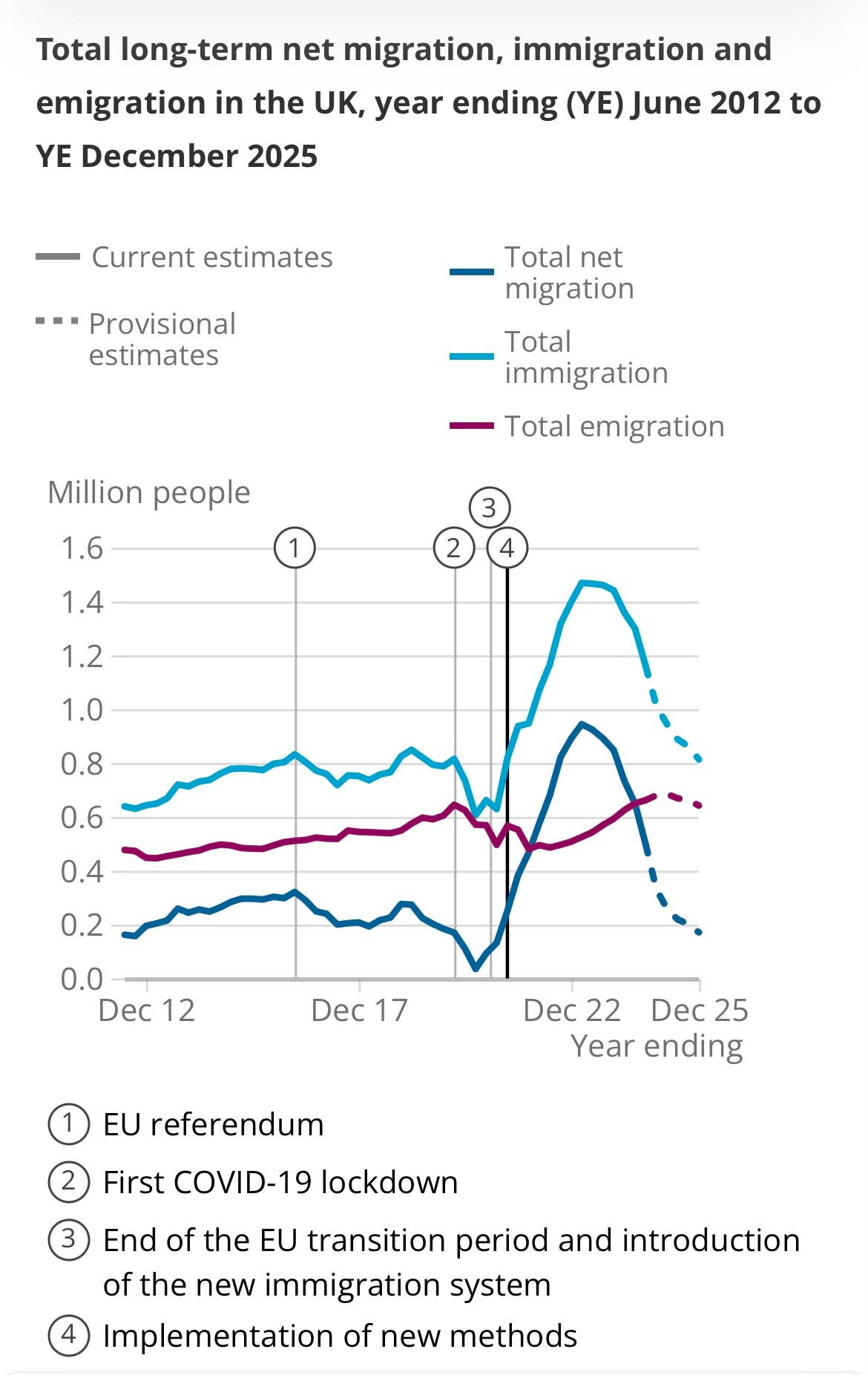
The government has reduced immigration dramatically. Net migration this year is projected to be the lowest this century, at less than 100,000, with net emigration possible in 2027. Having brought numbers down, ministers must now answer a central question that Keir Starmer avoided: what do they think is a sustainable level of immigration – and why?
They can acknowledge that the pace of change matters by setting a ceiling target, pledging no return to the unsustainable migration of the last parliament (when net migration peaked at 944,000 in 2023). Inflows above 0.5% of the population are too fast for housing supply to keep pace with. The government should also set a floor target, explaining why sustained net emigration and a shrinking population would damage the government finances, public services and higher education. NIESR has calculated that the economy would be 3.6% smaller by 2040 with zero net migration. A declining population would face sharper pressures and trade-offs on defence spending and financing government debt.
Labour could aim for net migration in this parliament to settle within a range of 100,000 to 250,000. But what successive UK governments have lacked is a proper plan for how to control immigration fairly. A three-year immigration plan – with an annual ‘Immigration Day’, similar to Budget Day in parliament – would set out a framework to guide decisions about handling the pressures, gains and impacts of change.
When politicians make tax and spending pledges, they are expected to show how the numbers add up, but that accountability has been absent in the last decade on immigration. Similar approaches to planning immigration policy in Australia and Canada have resulted in greater political and media pressure to acknowledge trade-offs and demonstrate what pledges mean in practice. It is primarily the visible lack of control over small boats crossing the Channel and asylum hotels that fuels public concerns about immigration – which may explain why plummeting net migration, mostly for work and study, has gone unnoticed. Further reductions in who can get a visa to study or work in Britain may simply be displacement activity.
The government has committed to emptying asylum hotels by the end of this parliament. Meeting this pledge within six months, not three years, would be noticed by voters. The Future Governance Forum has set out a three-step plan to achieve this through accelerated processing, a ‘Homes for Ukraine’-style scheme for vetted asylum seekers and a £3-5bn investment in community improvements and new homes (funded by measures one and two). This offers an alternative to the government’s plan to repurpose RAF bases, which are likely to cost more than asylum hotels even if local political controversy and lengthy planning disputes can be overcome..
A controlled refugee route to Britain, with community sponsorship and contact at its heart, has the potential to get right what dispersal policies have got wrong, by giving people the voice, power and control to welcome refugees to their local communities.
Real-world plans to link controlled, safe routes to the UK for asylum seekers with returns deals to Europe can address the asylum challenge with control and compassion. Labour needs to prove the merits of cooperation – opposing those who claim that simply quitting every convention and treaty offers any workable plan.
The party did not mention citizenship or settlement in its 2024 manifesto but has embarked on an enormously complex and controversial overhaul of indefinite leave to remain. Ethics aside, the government has underestimated the electoral risks of these proposals. While settlement is a complex, technical issue for most people, it is massively salient to the one million directly affected – mostly Commonwealth nationals with voting rights. That is why the reforms prompted the second largest consultation response ever, surpassed only by equal marriage.
New leadership will need to rebalance both rhetoric and policy to ensure clear rules without sacrificing fairness for care workers and others who have come to Britain. Most Labour supporters want to see a ten-year ceiling on settlement routes at most, not a 15 or 20-year wait. The unintended consequences of these rushed and flawed reforms will be a large spike in the undocumented population, something that risks a new Windrush scandal ahead of the next election.
Falling immigration means that Labour’s right-wing challengers are increasingly focused on who needs to leave – and on ethno-nationalist narratives about diversity. Burnham needs to recognise legitimate concerns shared across ethnic groups about fair controls on immigration, but he must also vocalise legitimate concerns about how the cruelty and chaos of mass deportation, remigration and racism risk tearing Britain apart. Most white British and ethnic minority voters considering Labour certainly hold both sets of concerns at once.
As prime minister, Burnham will have to grip these challenges rather than merely trying to change the subject. The new context of falling numbers requires a new strategy and voice. Labour cannot compete to eliminate immigration from Britain or engage in a deportation auction with Nigel Farage and Rupert Lowe. It must instead set out how it will manage reduced immigration fairly – while contesting the rising tide of racism that seeks to undermine the foundational values of the society we have become.
