
Arguably

Arguably

Andy Burnham’s foreign challenge

The next prime minister has defining choices to make on the US, China and Europe

Ben Judah's avatar
Ben Judah
Jun 17, 2026
∙ Paid
(Fly of Swallow Studio/Shutterstock)

Andy Burnham is going to be prime minister; the only political question left is when. But policy-wise there are still question marks over everything. Nowhere more so than on foreign policy, which has hardly featured in media interviews, even as “one last question, Mr Mayor!” Bizarrely, after two years in which Labour has been overwhelmed by geopolitics, the SW1 ecosystem has turned peculiarly insular, as if the burning issues of the winter will be devolution and the triple lock rather than Trump, Ukraine and chaos in the Middle East. This is what Burnham should be thinking about as he prepares for No 10.

The politics of foreign policy

It’s actually quite simple why Burnham is about to be prime minister and Keir Starmer is not. He’s got more of a feel for the politics of the Labour Party – how to speak to it and how to tell a story about his insurgency to the media. But the politics of foreign affairs is an art in itself. There is little time and there are two looming bear traps that could derail matters.

(Fly of Swallow Studio/Shutterstock)

Andy Burnham is going to be prime minister; the only political question left is when. But policy-wise there are still question marks over everything. Nowhere more so than on foreign policy, which has hardly featured in media interviews, even as “one last question, Mr Mayor!” Bizarrely, after two years in which Labour has been overwhelmed by geopolitics, the SW1 ecosystem has turned peculiarly insular, as if the burning issues of the winter will be devolution and the triple lock rather than Trump, Ukraine and chaos in the Middle East. This is what Burnham should be thinking about as he prepares for No 10.

The politics of foreign policy

It’s actually quite simple why Burnham is about to be prime minister and Keir Starmer is not. He’s got more of a feel for the politics of the Labour Party – how to speak to it and how to tell a story about his insurgency to the media. But the politics of foreign affairs is an art in itself. There is little time and there are two looming bear traps that could derail matters.

The first is that the Westminster media will quickly decide it loved Keir Starmer, building him up into something of a national treasure (as it has Rishi Sunak). Starmer’s real qualities on foreign affairs will constantly be compared to Burnham’s supposed weaknesses. The question won’t just be “have you spoken to Trump?” but “have you managed Trump as well as Starmer did?”

The second bear trap is one that Starmer actually fell into. The job of prime minister is not just to tell a story about Britain, but a story about the world to Britain. If you don’t, speaking to the country in clipped diplomatic ellipses, the Westminster media promote a narrative of Britain adrift.

Manchesterism works as a story and mood board for domestic politics. You need an equivalent for foreign policy – with an actual grounding in geostrategy. But the time to lay this out will be very short indeed. First impressions of a prime minister are everything. The fact that Starmer’s relationship with Trump is actually now rather poor matters less than the impression of diplomatic finesse he gave the political class on his first Washington trip. Burnham will have to make a good first impression while getting through two hazardous summits in quick succession.

The first is the poorly-attended Commonwealth summit in November in Antigua, which is today only really used by Caribbean leaders to do a parade in front of their media and ours demanding reparations for slavery (triggering inevitable accusations from the right-wing press that Labour is planning to sell Britain out). Mismanage the media and you end up with weeks of disingenuous front pages that Labour intends to offer trillions to the Caribbean; mismanage the summit and you risk a walk-out from Caribbean leaders in front of the King.

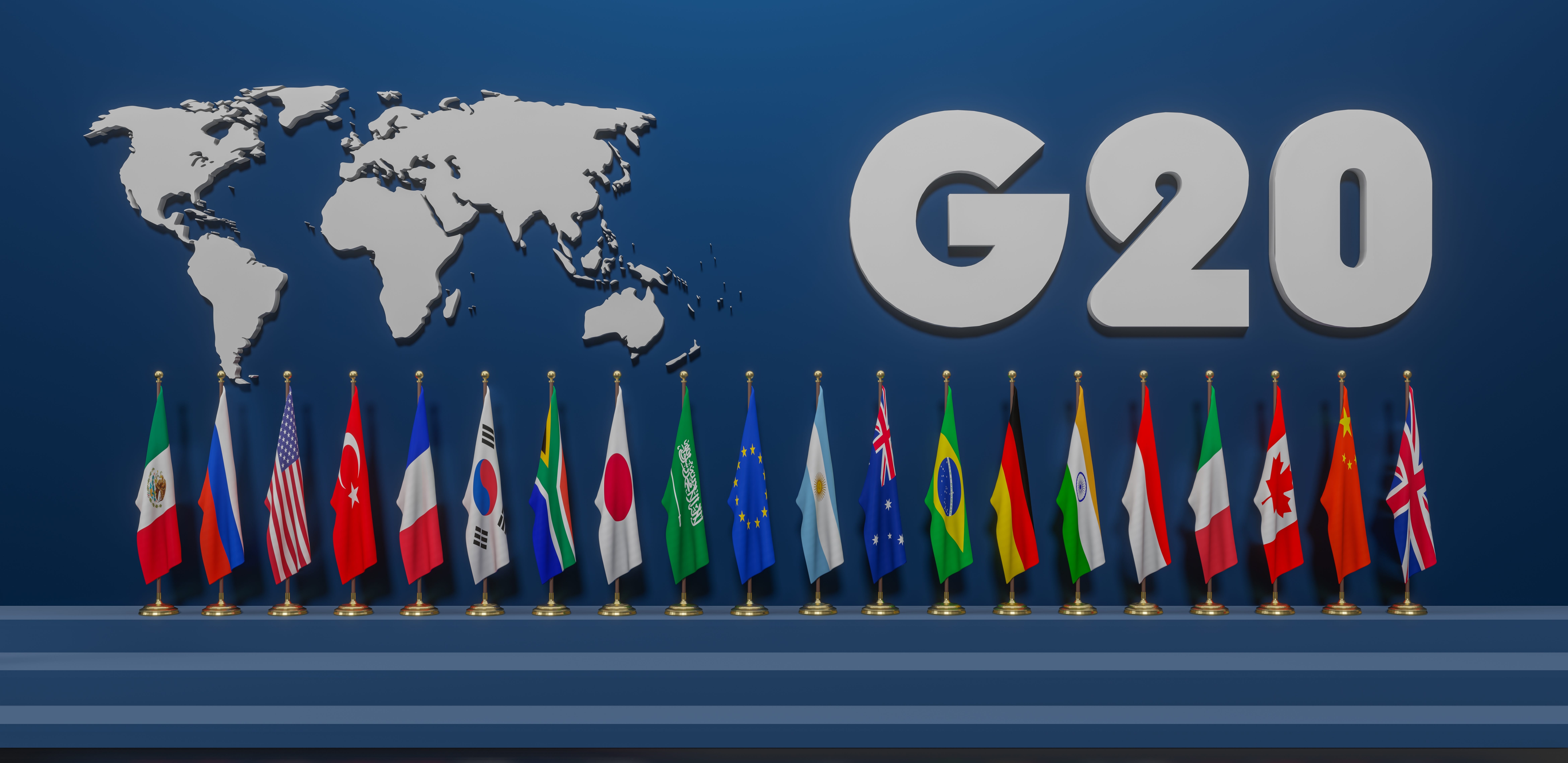
The second is the G20 in December in Miami, which could well be when Burnham first meets Trump. The optics of that will be everything, as will the dynamics with the Europeans. Starmer has set a high bar of bonhomie with Emmanuel Macron and Friedrich Merz. Trump’s likely desire to photo frame the world’s leaders as supplicants, as he did after the Gaza ceasefire was announced in Egypt, makes this hard. Pathetic poodle or ostracised puppy – the media will be unforgiving, as will the country.

Beyond crisis management

Team Burnham will need to be on top of all this before they’ve even got into the main foreign policy challenge, which is managing the crises themselves. Starmer has been forced to devote a huge amount of personal diplomacy to those originating with Trump. Without doubt, he has done well, from co-ordinating the Europeans, to thwarting Trump’s initial desire for a sell-out of Ukraine, to defusing his threats to Nato, to dodging his botched war in Iran.

Around this, an empowered Jonathan Powell, as national security adviser, has sucked all authority out of the Foreign Office and run a crisis management team. This has been successful diplomatically; I’ve heard the most senior US officials refer to Powell as the “Dean of European National Security Advisers”, the man they not only phone to know what the Europeans think but to coordinate them.

Starmer’s failure on foreign policy was to get beyond crisis management and to make definitive choices. These now fall to Burnham. The first is on the US. Do we think that something profound has changed? Or is Trump a blip? Because if you, like almost all our diplomatic and national security system, believe that Trump is not a one-off but a symptom of a more erratic 21st-century US, then you need to make major defence investments to build up our autonomy and independence.

(Joey Sussman/Shutterstock)

The Ministry of Defence, implicitly, has wanted the British state to make that choice by asking for a Defence Investment Plan big enough to include GCAP, a new fighter jet built with the Italians and the Japanese, instead of just new F-35s, which Washington can ultimately deny the use of. This matters if you believe the UK could face a situation in which it has to face Russia alone in the Baltic states with the US neutral or even hostile. Think President Tucker Carlson. The bottom line is that the lower defence investment is, the more vulnerable you are to US coercion in a decade’s time.

No 10’s inability to get beyond crisis management has also failed us when it comes to China. Lifting the lid on the UK’s China apparatus, split between the Foreign Office and the Cabinet Office, is quite a depressing experience. The British system is excellent when it comes to its traditional allies and traditional enemies – the G7 and the Russians. Of the rest, with the exception of India, the quality just isn’t reliably there. This is especially true on China.

Unlike the White House and the European Commission, where leaders are regularly exposed to trends and debates about China’s remaking of the world, from supply chains to technology, this simply isn’t the case in Britain. Not only do we not have enough people, those we do have are mostly diplomats, not cross-sectoral specialists as in Washington and Brussels who grasp 5G and critical minerals. The sinews and nervous tissue between security, technology and economics just isn’t there.

This weakness in the British system is a small part of why we’ve swung wildly from being the most pro-China major European state under David Cameron to being the most hostile under Liz Truss. There is no deep anchoring of expertise and accumulated knowledge in London, where the think-tank world lacks an equivalent to the Asia Society in the US or MERICS in the EU. Our wider British foreign policy blob gets the Russians and is ignorant of China’s remaking of the world.

Labour has been absolutely right to reopen basic diplomacy with Beijing but now it has to make geoeconomic choices. What is called Chinese “overcapacity” is a concerted attempt by Beijing to knock out Western manufacturing and monopolise this area in the future. At present, the EU is trying to put together a series of packages to defend its sectors from manufacturing to chemicals. Burnham will have to make a choice: are we going to join them or continue to take the Treasury’s non-interventionist line? This is a genuine political choice – tariffs on Chinese EVs would raise prices for consumers – but you can’t turn around in ten years and ask what’s happened to our manufacturing sector.

The final choice Burnham will have to make is on Europe. If you want to be less exposed to American and Chinese coercion, you are going to need more Europe. Starmer successfully reset our relationship with Paris, Berlin and Brussels. But he failed to signal intent or make much progress on where we go next. Again, Burnham will need to choose. Fundamentally, given the weakness of our economy, are we pursuing convergence with the EU to strengthen our manufacturing sector and goods trade? Or are we pursuing divergence, making a speculative bet on AI?

What it boils down to is this: are we primarily an economic partner or an economic competitor to the EU? A decade on from Brexit, the answer, if you wish to preserve a European-style social model, is clear. But there is no bespoke deal on offer to us. The EU will only offer the UK either a Customs Union and/or renewed membership of the single market with free movement, which opens the door to Rejoin. That means Burnham’s choice is how to manage this process politically. And this is again where Starmer failed: the Europeans feel that nobody has ever set out where they want the relationship to be in 10 years’ time.

Fixing No 10

When making such defining geopolitical choices, all roads lead back to No 10. But Burnham will want and need to spend less time on foreign policy than Starmer – and that means building a better team in Downing Street.

You should start by asking Jonathan Powell to stay. His contacts and the continuity they offer are invaluable. And if not, dismiss the diplomatic corps’ desire to hand the role back to one of their own. Consider politically appointing Richard Moore, the recently retired former head of MI6, instead. In my opinion, nobody on the FCDO’s likely shortlist makes the cut for what’s become just as important a role as that of foreign secretary.

Powell, however, has tried to crisis manage alone. No 10 needs a proper political team trying together politics, economics and security – not just a virtuoso soloist.

You should start with a deputy chief of staff empowered to lead for the prime minister and the chief of staff on all but the most critical of emergencies. This person should have a Europe special adviser, charged like Stewart Wood or Roger Liddle under Gordon Brown and Tony Blair, with having those political conversations with No 10. They should also have a special adviser managing the comms and the politics of foreign policy at home rather than outsourcing this task to the civil service or a distracted No 10 political director or director of communications..

This needs to be coupled with reform of the system around the National Security Adviser. This remains a rather 20th-century role when so many issues, especially those linked to China, overlap with economics and technology. No 10 needs to relaunch the National Security Council as the National Economic and Security Council to prevent these issues being defined by Treasury-says-no politics. This would redefine the role of the NSA and bring an expanded National Economic and Security Secretariat into the 21st century. Then consider politically appointed deputy national security advisers to plug the yawning gaps in the system in areas such as technology and geoeconomics.

But to really get out of foreign policy you need to make better use of your cabinet. That means truly empowering your foreign secretary and your deputy prime minister. Both these appointments will be key for Burnham. Appoint someone with gravitas, as Sunak did with David Cameron, and foreigners will be happy to work with them. Appoint someone with no heft on the world stage, ability to lead in Whitehall, or knowledge of the issues and expect key interlocutors to turn instead to No 10. The role of foreign secretary, unlike any other in the cabinet, shrinks or swells according to the occupant. It might just be speculation but the idea of recalling David Miliband from New York has real political merit.

The role of deputy prime minister needs to be expanded into a more diplomatic role, standing in for the prime minister at international summits and receiving VVIPs when required. They could also lead tech and business delegations that a foreign secretary mired in crisis management can’t handle, especially in Africa and Asia. David Lammy has begun to carve this out with his unique channel to JD Vance in the White House. That is not something easily replaced.

But the truth is all of this can only support a prime minister. In the end, the big decisions are up to them. Andy Burnham will soon take on the task of stewarding this nation through the choppiest waters we have faced since the aftermath of the Second World War. But as Starmer has shown, to be consequential as prime minister that isn’t enough. You need to make choices. That means deciding where a rebooted government wants us to be with the US, China and the EU in 10 years’ time – and then telling that story.

© 2026 George Eaton · Privacy ∙ Terms ∙ Collection notice
Start your SubstackGet the app
Substack is the home for great culture